Understanding the war in the Gaza Strip
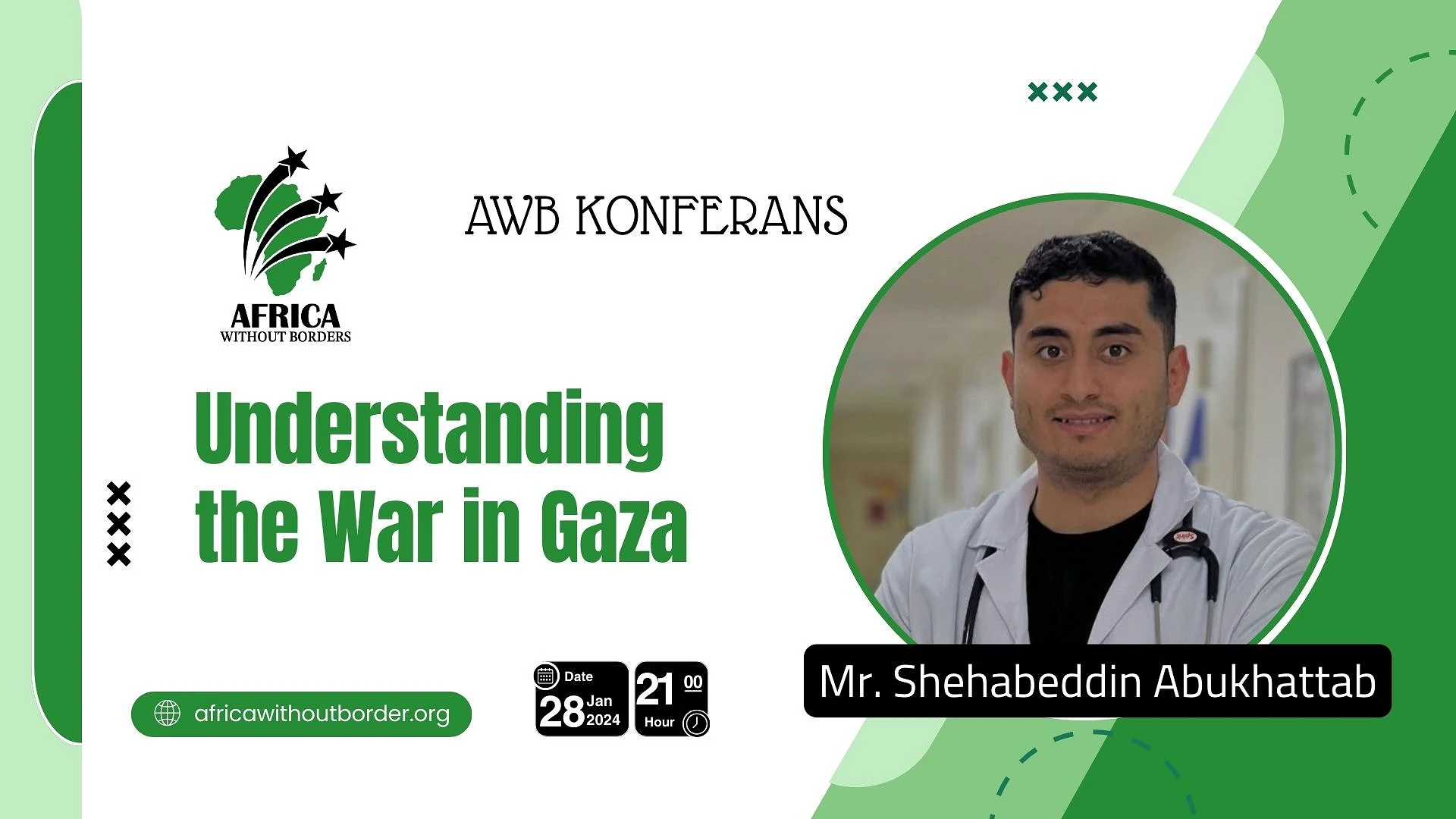
As part of the Global Agenda section, Africa Without Borders organized a conference dedicated to analyzing the war in the Gaza Strip. This meeting was part of a process of critical reflection aimed a…
- Date: 2024-01-28
- Location: Online
As part of the Global Agenda section, Africa WithoutBorders organized a conference dedicated to analyzing the war in the Gaza Strip. This meeting was part of a process of critical reflection aimed at better understanding the historical, political and humanitarian dynamics of the conflict. The conference was moderated by Shehabeddin Abukattab, Palestinian student and leader, president of the Palestinian students of Bâb-ı Âlem UOD, invited as a speaker. His intervention shed both analytical and contextualized light on the recent evolution of the conflict. During his presentation, the speaker recalled that the current war, the current phase of which intensified from October 7, 2023, is part of a long-term historical conflict, marked by the Israeli occupation, the repetition of cycles of violence and deep political, military and structural asymmetries. He stressed that this situation cannot be understood as a one-off crisis, but that it is part of a structural phenomenon lastingly affecting Gazan society. Speaking as a Palestinian directly confronted with the realities of the conflict, Shehabeddin Abukattab offered an analysis that was both embodied and rigorous, highlighting the major humanitarian consequences of the war in the Gaza Strip. He notably mentioned forced displacements, the massive destruction of civilian infrastructure, the restriction of access to health care and education, as well as the accelerated deterioration of living conditions. Particular attention was paid to the situation of young people and students, whose educational and professional careers are profoundly weakened by persistent instability. The speaker also critically questioned the role of the international community, highlighting the limits of diplomatic and humanitarian responses, as well as t