Presentation of the book “Beyond History: Pan-Africanism (Tarihten Öte Panafrikanizm)
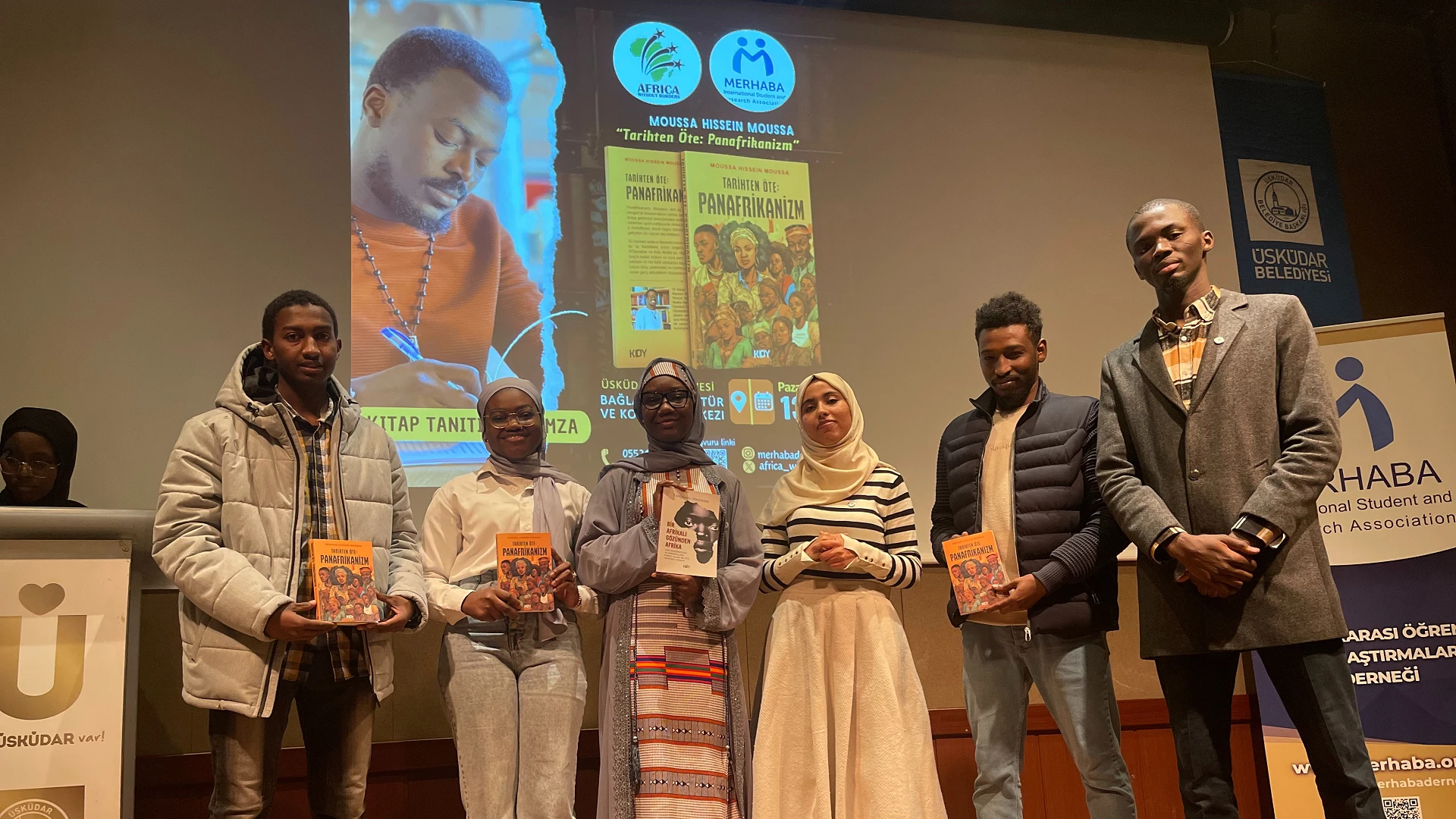
The presentation program for the book “Beyond History: Pan-Africanism (Tarihten Öte Panafrikanizm)”, written by Moussa Hissein Moussa, head of academic affairs for the Africa Without Borders organiza…
- Date: 2024-01-07
- Location: Bağlarbaşı kültür merkezi
The presentation program for the book “Beyond History: Pan-Africanism (Tarihten Öte Panafrikanizm)”, written by Moussa Hissein Moussa, head of academic affairs for the Africa Without Borders organization, was organized in collaboration with the Merhaba Association. This event allowed an in-depth analysis of the work from the perspective of its content, its conceptual framework and its intellectual objectives. During the program, the ideological foundations of Pan-Africanism, which constitute the backbone of the work, were examined in detail. The discussions focused on the historical origins of this thought, its close links with anti-colonial struggles, as well as its central role in the process of intellectual, political and cultural awakening of the African continent. The work approaches Pan-Africanism not as a strictly historical ideology, but as a dynamic, evolving and multidimensional thought, whose influence remains evident in the contemporary context. The book also offers an in-depth study of the major figures who shaped pan-Africanist thought, notably Kwame Nkrumah, Marcus Garvey and W.E.B. Du Bois. Their ideas, their strategies of struggle and the lasting legacy they bequeathed to African political thought are the subject of rigorous critical analyses. These figures are thus considered not only in their respective historical context, but also through the intellectual, social and political significance that they continue to have for African youth and the contemporary diaspora. “Beyond history: Pan-Africanism” therefore does not conceive of Pan-Africanism as a speech frozen in the past, but as a living thought, which today finds concrete extensions in the areas of African identity, cultural cohesion, political consciousness, economic cooperation and continental so